Pop Mart: From Beijing Boutique to Global IP Powerhouse
On March 25, 2026, Pop Mart announced its full-year 2025 results: 37.12 billion yuan (~$5.38 billion) in revenue, up 184.7% year over year, with adjusted net profit rising 284.5% to 13.08 billion yuan (~$1.9 billion). Overseas markets accounted for more than 40% of sales, and the company closed the year with 630 retail stores and 2,637 Robo Shops across 20 countries and regions.
Just over a decade earlier, Pop Mart was a small store tucked away in Beijing selling novelty knickknacks. Few would have predicted that selling figurines hidden in mystery boxes would one day give rise to a public company that crossed a $5 billion revenue mark and turned a plush elf-eared character into a genuine global phenomenon.
Pop Mart’s transformation from a small boutique to an IP powerhouse is inseparable from the vision and persistence of its founder, Ning Wang.

Who Is Ning Wang?
The question hovered in investor circles for years, until December 11, 2020, when 33-year-old Ning Wang, who also goes by Grant, rang the bell at the Hong Kong Stock Exchange.
At its IPO, Pop Mart briefly surpassed a HK$100 billion valuation, making it one of the most talked-about companies in China’s consumer-products wave of 2020–2021. (HSG led Pop Mart’s 2018 investment round and continued to support the company in subsequent funding rounds.)
Born in 1987 in Henan, China, Wang studied advertising at Sias University (formerly known as Zhengzhou University Sias International College) and spent a year at Sina Corporation, the company behind Weibo, before deciding to build something of his own. Since launching Pop Mart in 2010, he’s built it into the country’s undisputed leader in designer toys.
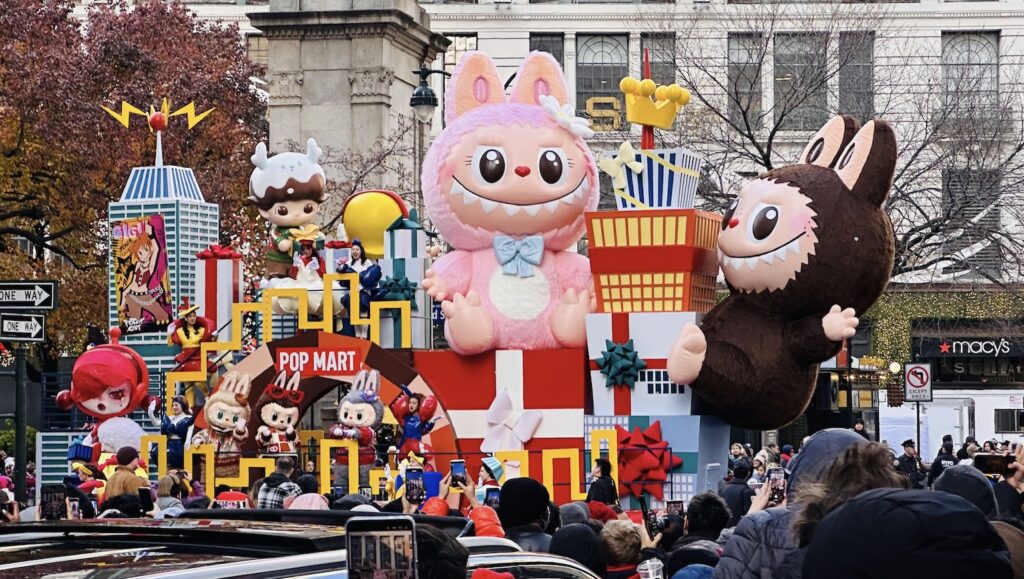
Characters like Molly, Skullpanda, Crybaby, Dimoo, and Labubu have become icons in the collectibles community, and by the end of 2025 six of them were each generating more than 2 billion yuan (~$295 million) a year in revenue on their own.
While these names may not be familiar to ordinary consumers, they’re rock stars to millions of fans. By the end of 2025, Pop Mart had 72.58 million registered members in China alone.
The Journey Before the Breakthrough
Wang’s entrepreneurial streak emerged early. During the summer vacation after high school, he launched a scrappy soccer camp in his hometown. Without a venue or staff, he printed leaflets and recruited children at the school gate. By the end of the summer, he had dozens of students, and this was the first time he had tasted the flavor of turning a vision into reality.
That same instinct followed him into college. In 2006, Wang founded “Days Studio,” a student-run production team that shot documentary-style videos of campus life and sold them to classmates as keepsakes of their college years. One student who joined the crew, Liu Ran, would later become an executive director at Pop Mart.
In 2008, during his college years, Wang began experimenting with retail. He came across a business model known as a “grid shop,” where a store is divided into small booths and rented out to individual sellers. Wang and his classmates opened one near campus and named it “Grid Street.” It stayed afloat even after he left for Beijing, where he worked briefly at an education company and then spent a year at Sina.
When Wang decided to go all-in on a new venture, he sold Grid Street for about 200,000 RMB (roughly US$30,000) — seed capital that funded the first Pop Mart store in Beijing’s Zhongguancun district in November 2010.
A Tiny Toy, a Big Leap
Pop Mart began as a trendy concept store — more lifestyle boutique than toy retailer. Its name was inspired by Hong Kong’s LOG-ON chain. The model: source fashionable goods, mark them up, and sell them in Pop Mart.
Then, in 2015, everything changed.
A tiny 8-centimeter collectible figurine called Sonny Angel became a viral bestseller, accounting for about one-third of revenue at Pop Mart stores. The demand was clear: the public wanted collectible toys. Pop Mart was no longer just a gift shop – it was evolving into a platform for designer collectibles.
But there was a problem: Pop Mart didn’t own Sonny Angel. It was merely a distributor for the Japanese copyright holder, Dreams. Each time Wang wanted to open a store in a new city, he needed Dreams’ approval to sell the figurines. That dependency posed a risk. Later, as the number of Pop Mart stores increased, Dreams gradually began to reject Pop Mart’s sales applications.
“It felt like Shoe Dog,” Wang later said, referencing Nike founder Phil Knight’s memoir. Just as Knight turned a rejection from his Japanese supplier into Nike, Wang knew it was time for Pop Mart to control its destiny.
From Boutique Retailer to IP Powerhouse
In early 2016, Wang asked on Weibo: “Besides Sonny Angel, what other collectible figures do you love?” His team sifted through replies and began contacting designers. One name surfaced repeatedly: Molly, a big-eyed character created by Hong Kong artist Kenny Wong.
At the time, Wang was keenly aware of the potential behind the IP, and he flew to Hong Kong several times, eventually reaching a collaboration with the artist. By July 2016, Pop Mart had launched its first blind box series featuring Molly’s Zodiac figures. It was a smash hit. Molly has remained one of the brand’s most iconic characters ever since, generating close to 3 billion yuan (~$442.9 million) in revenue in 2025 alone.
That moment marked Pop Mart’s transformation – from a trendy retailer into a vertically integrated toy company. Rather than just reselling, it began licensing original IP, working directly with artists, and even creating new characters in-house. A later signing with Hong Kong-Belgian artist Kasing Lung brought THE MONSTERS series and its now-famous Labubu character into the fold.
Pop Mart would then manufacture these collectibles as high-quality figurines and sell them through its stores and Robo Shops. Over time, it also secured licenses from the century-old entertainment giants like Disney and Universal.
In essence, Pop Mart became an IP engine – one that could turn a promising character into a physical, purchasable product for millions of fans. It found the flywheel: discover or develop a character, build a product around it, create buzz, scale it.
The Designer Toys Boom
As Pop Mart grew, so did the public’s curiosity – and confusion. Why were adults buying blind boxes filled with tiny figurines? What inspired fans to visit stores, compare collections, and search for limited editions?
Part of the answer lies in the product experience. In Pop Mart’s signature blind box format, buyers know the character series but not the exact figure inside each sealed package. That element of discovery adds anticipation and delight to the purchase. Pop Mart combined this format with distinctive character design and a highly shareable unboxing experience, turning each purchase into a small moment of excitement that fans often brought online and into their communities.
The category resonated because it offered more than a product. For many fans, it brought together aesthetics, emotion, and connection: the pleasure of discovery, the appeal of the designs, and the enjoyment of being part of a community of collectors. As enthusiasm grew, Pop Mart continued to broaden the audience for designer toys and helped bring the category into the mainstream.
In the process, Pop Mart showed that it was building something larger than a retail trend. With a brand centered on “To Light up Passion and Bring Joy,” it helped define a new category and became one of the companies most closely associated with the rise of designer toys.
Turning Characters Into a Global IP Ecosystem
Pop Mart is extending its characters beyond collectibles and into a broader consumer and entertainment ecosystem. A Labubu film developed with Sony Pictures is in the works, while a FIFA World Cup collaboration launched in June 2026.. The company has also expanded into new categories, including jewelry under its popop brand and home appliances.
Pop Land, the company’s IP-themed park in Beijing’s Chaoyang Park, opened in September 2023 as the first immersive IP-themed park in the art toy industry. At roughly 40,000 square meters — about one-thirtieth the size of Shanghai Disneyland — it was a relatively modest start. But the park is now being expanded, with visitor numbers in the first half of 2025 already surpassing the total for all of 2024.
By the end of 2025, Pop Mart’s brick-and-mortar and Robo Shop footprint spanned 20 countries and regions, with cross-border e-commerce reaching well beyond that. If the past decade was about proving art toys could go mainstream, Pop Mart’s next chapter is about scaling its IP to global entertainment heights.
That ambition will take time. But Pop Mart has already laid the groundwork for something much bigger than a successful collectibles business. It is building a new kind of IP company — one with the potential to travel farther, and resonate more widely, than almost anyone would have predicted at the start.