Spotlight: Silvio Campara on Golden Goose and the Business of Belonging
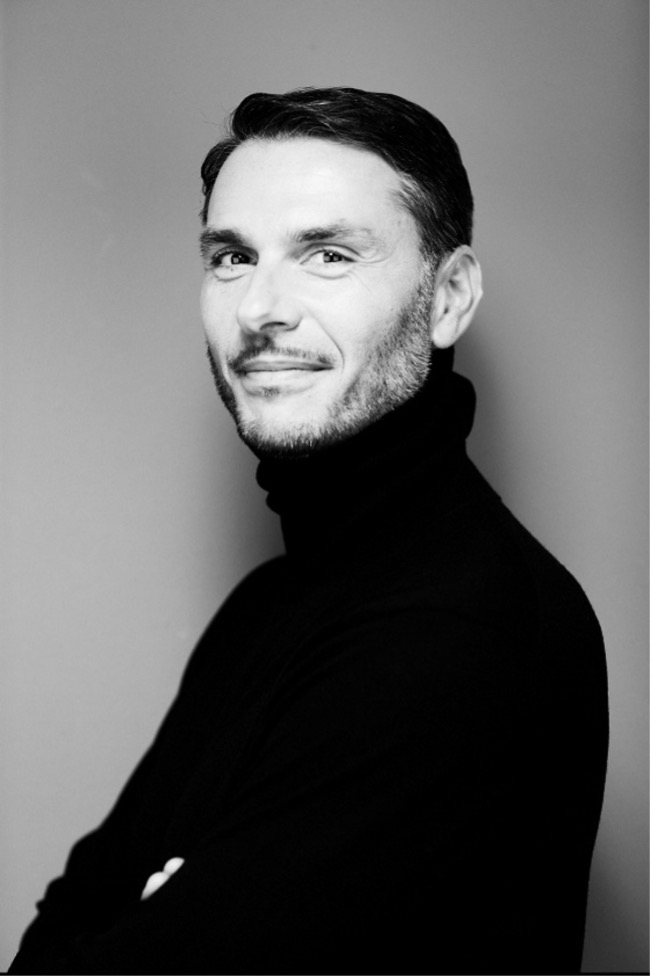
Silvio Campara has spent much of his career thinking about how people form emotional connections to brands.
At Golden Goose, the answer begins with imperfection. Its sneakers arrive deliberately lived-in, designed to become more personal with wear. Customers can work alongside artisans to personalize their own product, writing their personal story on it. Stores are conceived as places for people to spend time and create, while the company’s HAUS concept takes that idea further by bringing communities together around craft, culture, and shared experiences.
For Campara, who joined Golden Goose in 2013 and today serves as CEO, these ideas reflect a broader shift in luxury: from a global product brand into a cultural brand, with a strong emphasis on people and communities.
We spoke with Campara about his unconventional path through fashion and private equity, the decisions that helped shape Golden Goose into a global brand, his approach to leadership and customer relationships, and his ambitions for the company’s next chapter. (HSG acquired a majority stake in Golden Goose in June 2026.)
1. For readers who are new to Golden Goose, how would you describe the company?
Golden Goose is a luxury brand built around sneakers, and every pair carries a message. Our shoes arrive worn on purpose, with a star that has one point cut off. The scuffing tells you: take it easy. The more you use the shoe, the better it becomes. And the cut star speaks to anyone who has ever felt imperfect: the thing you think makes you imperfect is often exactly what makes you unique.
The shoes themselves are pieces of craft. More than three and a half hours of handwork goes into each pair. The upper is handmade and hand-stitched, and the materials are chosen to age beautifully, so the shoe becomes more personal the more you wear it, like an old pair of Levi’s. Around our sneakers, we also create full ready-to-wear collections inspired by journeys through different parts of the world, because the things you collect when you travel become part of your look, your home, and your memories.
Golden Goose is a love brand. People today, especially younger generations, want to feel good. Our goal is to reach customers’ hearts through Co-Creation, our personalization experience, where we invite them to write their own story on their products, with the help of our artisans, the Dream Makers. At Golden, we want people to connect, create, and feel good about who they are.
2. Your career took you from Alexander McQueen and Giorgio Armani into working with investment funds. How did those experiences shape the way you think about building brands?
It started with a photograph. I was 17 when I saw an MTV report on Alexander McQueen, photographed by David LaChapelle with Isabella Blow in front of a burning Scottish castle. It looked like the sum of who I was and where I could go. I still have that photograph hanging in my office today.
What fascinated me about fashion was always the people. The designer provides a language for speaking to the consumer, and the consumer was what interested me most. I began in retail at Alexander McQueen and later joined Giorgio Armani, a company that gave me so much. McQueen was my education in product; Armani was my PhD in business. By 29, I had opened almost 60 Armani Jeans and Armani Junior stores across Asia.
Eventually, I felt the need to take something on from scratch and find out whether I could have that same kind of impact myself. Investment funds gave me that opportunity. I saw it as a kind of relay with a dream that had originally belonged to someone else, usually a founder, and helping carry that dream forward. At the time, funds were only beginning to invest seriously in fashion houses, so I became one of the first specialists working between those two worlds. In a way, I invented a job.
One of my first experiences was Sundek, a swimwear brand. It was incredibly difficult, and that made it one of the most valuable experiences of my career. We were constantly tight on cash and sold almost entirely through wholesale agents, which meant we were separated from the people actually buying the product. I learned that I needed to get closer to the customer, hear directly what they thought, and build from that feedback.
Almost everything I have built since comes from that lesson. A difficult experience was a gift, because it taught me very early that building something is 99 spoonfuls of difficulty for every spoonful of goodness.
3. What did you see in Golden Goose when you first encountered the company in 2013?
I found a culture, an enormous story, and a gigantic value system built on the celebration of imperfection. Alessandro Gallo and Francesca Rinaldo had founded Golden Goose in December 2000 and named it after Aesop’s fable of the goose that laid the golden eggs, which for Alessandro was a sign that if you do good, you receive good.
Meeting Alessandro was magic at first sight. Another luxury brand had approached me to be their general manager in China, and Alessandro and I simply clicked. It was in the first Golden Goose showroom on Via Salaino in Milan, with Francesca there too. They both come from Veneto, and so do I. Being from Veneto goes past geography. It is a sense of belonging. We were both 33, and he had imagined all of this at 20. We sat together for 12 hours and wrote a P&L. I still get goosebumps thinking about it.
He wasn’t talking about product, and he wasn’t talking about style. He was sharing a mission: to make the world a better place by unleashing in everyone the sense that creativity comes from your uniqueness, and your uniqueness comes from your imperfections. That is why they cut the star. That is why the dirty shoe, the distressed items. I asked him, very humbly, how I could help. He said: we theorized it, we turned it into product, and we need someone to tell it and narrate it to the whole world. We think you could be that person.
From that moment on, my role was to understand what Alessandro and Francesca had built, and to find the best way to bring that vision to the world. I always felt that the foundations were already there: my job wasn’t to reinvent them, but to recognize their value, nurture them and help them grow.
4. When you arrived in 2013, sneakers were only one part of the business. What made you decide they should become its center?
When I took the company in hand, about 65 percent of the business was ready-to-wear, 15 percent was Texan boots, and only 20 percent was sneakers. We didn’t have the budget or the marketing power of the larger fashion houses, so we had to play our own game. Sneakers were the one category that, at the time, didn’t really belong to anyone.
I’m also a child of the ’90s. I grew up in a world of bags, jewelry, and watches. As Virgil Abloh understood and expressed so well, sneakers represented a different kind of culture, one that moved from the bottom up. A bag, a watch, or a piece of jewelry could set you apart from other people. A sneaker could make you feel part of something.
From there, consistency became incredibly important to us. I often tell my team that consistency is the new creativity. Around 76 percent of our sales still come from products that were designed before I arrived. We have 21 silhouettes, and we introduce roughly one new silhouette every two years, while adapting products to local tastes and cultures.
We believe our sneakers are timeless, which is why we never discount them. Fashion can become obsessed with constant novelty. We have tried to build consistency instead, because consistency creates familiarity and trust.
5. Golden Goose owns and runs every store in its network. Why is that important to you?
A relationship works when you conduct it yourself. If your goal is to help people feel like the best version of themselves, you have to speak to them directly. For me, relevance comes before revenue, and relevance comes from human connection. That is why I often talk about an economy of humanity, and why owning our stores has always been so important to us. You cannot be truly devoted to the customer and outsource that relationship.
In the beginning, the store was also our marketing, because we had very little money to spend on anything else. Today people talk about retail as media, but we began thinking that way more than a decade ago, when Golden Goose had around €20 million in revenue and no stores of its own. We wanted each store to become a home for the people who loved the brand.
That philosophy still shapes how we design them. Every store reflects something of the culture and spirit of its city. The doors stay open. We don’t believe in making customers queue outside. When you enter, we want you to meet people who are kind and empathetic.
Our first store opened on Via Cusani in Milan in October 2013. At the time, €167,000 in annual rent felt enormous, but the store generated €1.6 million in revenue in its first year and today does more than €7.5 million. That experience was magical for me. For the first time, we had a home for the people who loved Golden Goose, and I began to understand the real potential of the brand.
Our first five stores were in Milan, Paris, New York, Seoul, and Tokyo. From the beginning, we wanted to prove that Golden Goose could speak to people across different cultures and become a truly global brand.
6. Co-Creation has become one of Golden Goose’s signatures. How does it work, and where did the idea come from?
In any of our stores, a customer can work alongside one of our artisans to finish their own pair and make the creative decisions themselves. We call these artisans Dream Makers. We created this profession from scratch, and today we have more than 490 of them around the world. So many people want to be creative, but they are afraid of making mistakes. Having someone there to guide the process can unleash their creativity.
The idea came from my own wardrobe. I asked myself: what was the coolest thing I owned? It was a pair of Jordans I had worn playing basketball on the parish court. They were broken, they had a hole in them, and I would never have thrown them away because I loved them too much. That made me think: how do you turn a beautiful product into something a person truly loves? You put your own hands on it.
I also had this idea that if younger generations were already creating their own content, eventually they would want to create their own products too. So in 2019, we began taking shelves out of our stores and replacing them with tables where people could make something. Suddenly we were inviting customers into the store to create, rather than simply to shop.
Today, Co-Creation accounts for more than 30 percent of our revenue, and among younger customers in our stores, participation is close to 57 percent. When people ask me who the designer is, my dream answer is that all of our customers are the designers. I just design the canvas.
I call this sentimental innovation: making the product become the story between the brand and the customer.
7. Golden Goose stores go beyond traditional retail. What are you trying to create with them?
Golden Goose has always been a pioneer in retail experiences. As the brand continues to evolve from product to experiences, Co-Creation will reach new heights and extend beyond the products you wear to embrace the art of crafting and creating something with your own hands through Arts & Crafts. Arts & Crafts is our global program of workshops that brings craftsmanship and entertainment together. Through hands-on experiences guided by local artisans, people can disconnect from digital noise, reconnect with one another, and create something with their own hands. We call this craftainment.
People today are looking for authentic time with one another. Families ask where they can go with their children and actually do something together. I tell them: come to us. You don’t have to buy sneakers. You can spend an afternoon making something with your hands and creating together.
I’m not a genius. I’m simply fast at catching social trends rather than fashion trends. People spend every day looking at a phone that can make them feel they are not enough. Creating something with your own hands can give you back a sense of value.
8. What is HAUS, and what role do you see it playing in Golden Goose’s future?
HAUS is our global cultural platform. We opened it in 2024, during the Venice Biennale, as a home for our community of Dreamers, and it brings together creatives from different disciplines and backgrounds. It’s rooted in Marghera, the industrial port of Venice where Golden Goose was born. The space is both physical and digital, and it carries our DNA: our core values brought to life through craft, culture, and art.
Craftsmanship and artisanal traditions sit at its core. HAUS hosts our Academy, where skilled artisans train the next generation of Dream Makers and give them the tools to pursue their creativity and preserve the art of craftsmanship. The courses and seminars build skills and knowledge across disciplines, supporting personal growth as much as professional. Classes cover crafts, including shoemaking, tailoring, and screen printing, alongside contemporary cultural activities such as DJing and public speaking. We want to push craft forward through different interests and dreams, so we design these programs to be valuable to people from many backgrounds, experiences, and perspectives.
HAUS is also home to Manovia, our space for product innovation and repair, where we extend the life of Golden Goose products. The Archive, the Library, and the Playground – which also serves as our auditorium – open the brand’s culture and heritage, and invite people to use their creativity inside the Golden world. The Hangar is for exhibitions, where we showcase artists, their work, and their vision.
During the Venice Biennale, we entrust an artist with the keys to HAUS and invite them to bring new life to the space through installations and immersive experiences.
As we continue to expand HAUS internationally, our ambition is for each one to be deeply connected to the community it serves. Each HAUS should reflect the culture and creative energy of its city, bringing together local artists, artisans, and people from different backgrounds to share knowledge and inspire one another. This is an important part of the future of Golden Goose: going beyond products to create meaningful experiences, encourage creativity, and build a real sense of belonging.
9. You’ve argued that the traditional luxury model built around desire is giving way to something else. What do you think is replacing it?
Belonging.
For centuries, luxury was built around desire. A brand created distance between itself and the consumer, and that distance created aspiration.
My generation grew up with a very different relationship to time. You studied, you built a career, you saved, and eventually you bought the watch, the house, or the car. Social media has changed that rhythm. Everything is immediate. People see every possibility in front of them all the time.
So I believe luxury has to move from desire toward belonging. I sometimes call it the shift from luxury to ‘lovexury’: turning a product from an object of appearance into an object of belonging. Marketing is for selling; branding is for belonging.
Twenty years ago, luxury was defined primarily by the product. Today, beautiful products are everywhere. Time, experience, and authenticity have become increasingly important.
For me, authenticity is itself a form of scarcity. Something does not have to be rare simply because it is expensive or difficult to obtain. If you participate in making it, if your hands and your story become part of it, then it becomes something that only you can have.
That is ultimately what we are trying to create at Golden Goose. We don’t sell sneakers. We sell happiness.
10. You’ve described yourself as Golden Goose’s ‘Chief Emotional Officer.’ What does that mean in practice?
It describes the part of my job that shapes everything else. At Golden Goose, we interpret fashion as society, so the first exercise is empathy: the ability to step into someone else’s shoes and understand how they feel. Emotions are at the heart of innovation and customer loyalty, so I spend a lot of my time trying to understand where people’s hearts are moving and bringing that emotional intelligence into the business.
That starts inside the company. More than 53 percent of our people are under 32, around half are in their first job, and roughly 60 percent are women. About 85 percent of our customers are between 16 and 45, so there is a kind of osmosis between the people inside Golden Goose and the people we serve.
When I interview someone, I always ask: ‘What is your dream?’ Most people struggle to answer because they are afraid of saying something foolish. I want people to tell us their story and then make it part of our story. We don’t have employees; we have dreamers.
It also shapes what we measure. I would rather have a customer visit us four times and give us four opportunities to build a relationship than focus only on maximizing a single transaction. We look at NPS, lifetime value, and customer retention because those tell us something about the quality of the relationship.
What I ask from our people is ‘smiling eyes.’ Your greatest urgency should be to make people feel good.
11. As you look toward the next decade, what do you want the next chapter of Golden Goose to look like?
I’ve been thinking about Golden Goose’s next decade for a long time. The important thing is to be clear about where we want the company to go and what we want it to become.
A big part of my career has been spent in Asia. At Armani, I worked across China, Korea, Japan, Southeast Asia, and Australia. I first went to China in 2005 and have visited more than 54 cities there. Whenever I arrived somewhere new, I would ask our local partner to show me what they considered important about the place and then take me to eat. Only after that would we talk about shopping malls or store locations.
That approach still influences the way I think about growth. Our stores are designed to reflect the culture and spirit of the cities they are in, and we adapt products to local tastes. Two of our first five stores were in Seoul and Tokyo. For me, being global means being deeply connected to the places and communities where you operate.
Looking ahead, I see Golden Goose evolving from a global product brand into a cultural brand, with people and communities at its heart. Our stores will continue to evolve beyond traditional retail spaces, becoming more experiential environments where people can connect, express themselves, and share experiences. That means more craftainment, in more cities.
I believe there is enormous potential to create more experiences around art, craft, and creativity, building stronger connections with local communities. Ultimately, people are looking for real connections and meaningful, joyful moments. I want Golden Goose to be a brand that creates those moments, where the product is just the beginning of a much bigger experience.
12. You’ve said you love failure. What has it taught you, and what would you tell someone starting out today?
We embrace ‘Perfect Imperfection’ at Golden Goose, because life itself is never perfect and authenticity comes from accepting that. I love failure. It makes me feel terrible, but that feeling gives me the intensity to discover something new about myself.
I grew up thinking I should be the best at everything. Then you begin to fail, and you realize that the space between the person you imagined yourself to be and the person you actually are represents the size of your opportunity. A crisis can contain the beginning of your next self.
Inside Golden Goose, that becomes a habit. We wake up every morning thinking we are last in line and that everything can be improved. Any strategy begins to age the moment you create it, so we try to make mistakes early, learn early, and keep improving.
My advice to someone starting out is to live. Being a visionary simply means being connected to society, and to understand society you have to experience life.
Defend your boredom, too. Growing up in Lugagnano, there were afternoons after school when I had absolutely nothing to do. Those empty hours gave me the space to connect dots. Imagination doesn’t come from genius. You train it slowly, by observing things and connecting dots that at first seem unrelated.
And ask yourself two questions: Who am I? What do I want?
Being a dreamer requires what I call sentimental memory. Go back to yourself at 15 or 16, lying in your bedroom and looking at the ceiling. Somewhere in that moment, you probably saw a blurred image of the person you wanted to become. Stay faithful to that person. Once you find something that truly represents you, pursue it with everything you have.
What brought me here was very few values, few ideas, few friends, and a lot of guts to keep working hard. Never stop dreaming.