Klook: The Infrastructure of Spontaneity
How a cash-only moment in Nepal sparked the platform that digitized “things to do” worldwide
The problem revealed itself at the worst possible moment — somewhere above the Himalayas, minutes before two friends were about to launch themselves off a cliff.
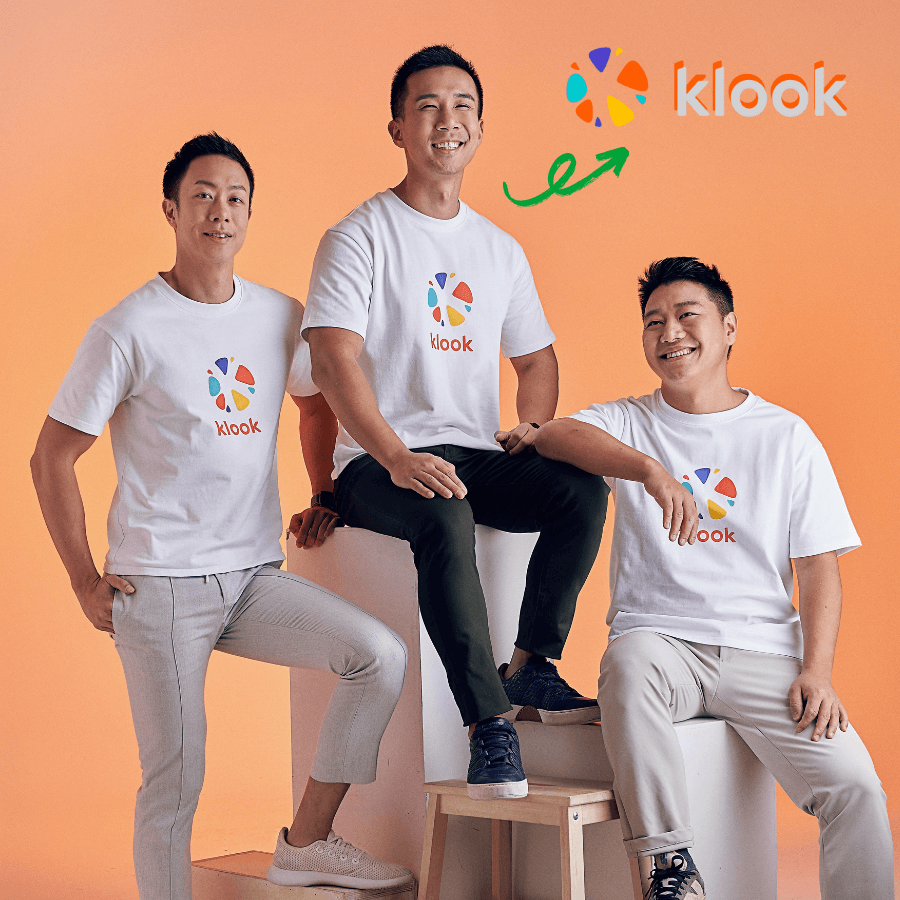
Ethan Lin and Eric Gnock Fah had come to Nepal in 2013 seeking adventure, a break from the spreadsheets and deal flows of their Hong Kong finance jobs. They’d spent weeks researching the perfect paragliding experience, comparing operators, reading reviews, planning every detail with the meticulousness that had served them well in finance.
But now, standing on a mountaintop with their instructor waiting, they faced an absurdly analog problem: the operator couldn’t accept credit cards. Neither could anyone else they’d encountered trekking through Kathmandu’s winding streets — not the tour guides, not the cooking class instructors, not the boat operators on Phewa Lake.
So there they stood, pockets bulging with cash, forced to carry paper currency like backpackers from another century. It was a jarring disconnect. At their day jobs, millions could be moved with a keystroke. They lived in a city where everything from coffee to taxis could be summoned and paid for with a tap. Yet here, at the moment of actual experience, the entire system collapsed into haggling and cash counting.
“While we had spent a lot of time doing the research and planning the trip, there was no magic button to make the transactions more convenient,” Ethan said. The irony wasn’t lost on either of them. Flights and hotels had been digitized for years, but the experiences that made travel memorable remained trapped in an earlier era.
On the long flight back to Hong Kong, as the adrenaline from their paragliding adventure faded, a different kind of excitement took hold. What if someone built a platform that could bridge this gap? Not just for paragliding in Nepal, but for every spontaneous cooking class, every last-minute museum ticket, every boat trip booked on impulse in any corner of the world?
That question became Klook.
The Leap
For most people, the Nepal revelation would have made for a good dinner party conversation, and that would be it. But Ethan and Eric weren’t most people.
The two had met through Hong Kong’s tight-knit circle of young finance professionals. Ethan spent years at Citibank covering travel and hospitality deals, and Eric had a front-row seat to how capital flowed through global markets at JP Morgan. They understood how businesses scaled, how investors thought, and, crucially, how to recognize an arbitrage opportunity when they saw one.
The safer path was obvious: continue climbing the corporate ladder and file the Nepal experience under “interesting problems someone should solve someday.” Instead, they jumped.
Ethan resigned from his analyst role first. Eric followed and even sold his apartment to free up seed capital.
“I only have one life, and I wanted to start a business and have no regrets later,” he explained, with the certainty of someone who’d already made peace with the risk.
“I only have one life, and I wanted to start a business and have no regrets later.”
Eric Gnock Fah
Together, the founders pooled their savings, swapped suits for backpacks, and began mapping the opportunity on a spreadsheet.
In that Excel file, they tried to quantify something every traveler intuitively understands. The big pieces of travel like flights and hotels had already been claimed by multibillion-dollar platforms like Expedia, Priceline, and Ctrip. But the “things to do” side of travel, or what the industry called “in-destination experiences,” remained strangely primitive. The infrastructure to capture that growth barely existed. If someone could connect that offline world to mobile-first travelers, there was a genuine business to be built.
Ethan and Eric also knew they could not do it alone. They turned to LinkedIn, hunting for technical talent with the same diligence they’d once applied to sourcing deals.
Eventually, they connected with Bernie Xiong, a software engineer who immediately understood the challenge. This wasn’t just about creating a website, but architecting a foundation that could support global expansion that includes multiple currencies, languages, payment systems, and thousands of suppliers across dozens of countries without collapsing under its own complexity. Bernie signed on as the third co-founder and began building.
Klook, short for “keep looking,” was live by September 2014.
Early Challenges: Knocking on Doors
In theory, the plan was elegant: aggregate the experiences travelers struggled to find online — think theme park tickets, cooking classes, temple tours, even local SIM cards — into a single, mobile-first platform. In practice, it meant cold-calling hundreds of small operators who’d never heard of an online travel agency, let alone understood why they needed one.
“The travel activity space is a lot more segmented compared to hotels and airlines,” Eric said. “Back in 2014, there were only a few providers who knew about our platform. We were literally knocking on their doors cold, hoping to form partnerships.”
The work was unglamorous and humbling. Ethan and Eric became traveling salesmen, schlepping to travel fairs across Asia, staging offline demo events, and leveraging every personal connection they had. They’d meet operators at their storefronts or offices, often waiting hours for a 10-minute pitch. The founders had to explain not just what Klook did, but why going digital mattered at all.
The rejection rate was brutal. Why would a tour operator in Bali trust two guys in their twenties from Hong Kong with no track record? Why pay a commission when walk-up customers cost nothing? The established players, like hotel concierges and tourist information centers, had decades of relationships. Klook had nothing but a logo and a pitch deck.
But the founders had patience. Each “yes” led to another conversation, another introduction. Slowly, operator by operator, they began assembling a network. Unlike aggregators who relied on third-party middlemen, Klook integrated directly with suppliers. This meant better pricing, instant confirmation, and a seamless user experience. When a traveler booked a ticket on Klook, the operator received the booking in real time. No phone calls, no faxed vouchers, no confusion at the gate.
The founders called it their “global-local” strategy. In practice, it meant hiring country managers who understood both their local markets and Klook’s global vision, what Eric called “jack-of-all-trades type talents,” or people who could improvise, adapt, and build from scratch.
It meant accepting Alipay in China, GrabPay in Southeast Asia, and credit cards in Western markets. It meant curating different experiences for different travelers. “Localization is not only about language,” Eric explained. “It’s about creating experiences that truly fit local markets’ needs, from content and offerings to payment methods and user experience design.”
“Localization is not only about language. It’s about creating experiences that truly fit local markets’ needs, from content and offerings to payment methods and user experience design.
Eric Gnock Fah
Choosing the Hard Part of Travel
When people hear “online travel,” they usually think of cheap flights and hotel deals. From the beginning, Klook chose not to compete there.
“We looked at the travel space and asked ourselves, ‘Where can we add value?'” Eric said. “In-destination was ripe for consolidation and disruption using technology.”
At the time, tours, attractions, activities, and local transport were still largely analog. A single city might have hundreds of operators, each with their own schedules, pricing quirks, and booking habits. Information was fragmented. Many suppliers didn’t have websites, let alone digital payments. Translation, when it existed, was often literal rather than cultural. For travelers, that meant guesswork at best.
Even as early usage showed promise, convincing investors was another matter. When Ethan and Eric first pitched Klook, they were often met with the same question: hadn’t companies like Priceline, Expedia, and Ctrip already won?
The founders’ banking backgrounds sometimes worked against them early on, because some investors assumed they lacked deep travel-domain expertise. So Ethan and Eric let the numbers speak for themselves.
Klook’s usage was growing rapidly, driven by repeat bookings and mobile-first behavior. By 2018, monthly traffic had reached roughly 25 million, and mobile bookings were tripling year-over-year. That kind of growth, inside what many assumed was a mature category, forced investors to revisit their assumptions.
For investors, the metrics challenged long-held beliefs about the tours and activities market. Klook wasn’t just another booking site. It combined a structured product catalog and user reviews on the front end with a deeply integrated supply chain behind the scenes, a model HSG describes as community plus commerce.
HSG partner Qingsheng Zheng saw the opportunity in that gap. “Flights and hotels were already easy to book, but once you landed, the experience side of travel was still fragmented. Klook made discovery feel trustworthy, then built the supply connections so booking could be instant and reliable.”
HSG led Klook’s $30 million Series B in 2017 and its $200 million Series D the following year, supporting the company through a critical phase of expansion. As Klook scaled, HSG introduced co‑investors and provided guidance on regulatory compliance in new markets. By late 2018, Klook had surpassed a $1 billion valuation and raised several hundred million dollars to accelerate growth, with HSG continuing to back the company through its Series E+ round in 2023.
The Infrastructure of Spontaneity
In the early days, the founding team did the unglamorous work by hand.
Klook’s small team spent days on foot, walking city streets and visiting tour desks, dive shops, amusement parks, and family-run operators running weekend excursions. To win vendors over, the startup built simple tools to digitize inventory and pricing, ran small offline demos, and helped operators take better photos and write clearer descriptions.
That slow work, done partner by partner, became a durable advantage: direct relationships and a stronger supply base that competitors could not replicate overnight.
After starting with Asian destinations, Klook quickly expanded into Australia, Europe, and North America. Ethan has described the company as one that “follows the traveler.” As customers ventured farther from home, Klook raced to make sure the app worked just as well wherever they landed.
To compete in each market, Klook kept iterating its product. It introduced instant confirmation and QR-code e-tickets, so travelers could book on their phones and scan in moments later. It partnered with major attractions to create fast-track entry. It also bundled experiences into curated passes that combined classes, tours, and transport at a discount, which reduced friction for travelers who did not want to plan every detail.
Behind the scenes, thousands of curators helped scout and vet activities all over the world. On the front end, Klook leaned into content: travel guides, creator partnerships, and photo-driven reviews that encouraged users to share their experiences. Growth accelerated through word of mouth and social media, pushing bookings from the first million to the many millions that followed.
Today, Klook offers hundreds of thousands of experiences across roughly 42,000 destinations, in multiple languages. More than 80 percent of bookings happen on mobile, often from travelers who are already on the move.
Weathering the Storm
Nothing tested Klook’s infrastructure more than 2020.
With borders closed and planes grounded, the company’s core business was hit almost overnight. International travel collapsed, and bookings vanished. For a platform built around exploration, the idea of a world in lockdown was hard to fathom.
Ethan and Eric often describe that year as a trial by fire that demanded speed, discipline, and a different kind of resilience. The company moved quickly to conserve cash and made difficult decisions in an environment where the timeline for recovery was uncertain. At the same time, the founders were adamant about not waiting out the storm.
The team reprioritized product and supply, then shifted toward domestic experiences like hiking trips, nearby getaways, restaurant vouchers, wellness packages, and attractions within driving distance. As the pandemic dragged on, Klook saw a surge in new local activities added to the platform. Traditional tour operators began serving customers in their own cities, and Klook leaned on its merchant relationships to help partners move online quickly.
Innovation extended beyond supply. Klook experimented with live video, launching Klook Live to help merchants showcase experiences, run limited-time offers, and stay connected with users who were dreaming about future trips from their living rooms. The goal was to keep the ecosystem alive while borders remained shut.
By early 2021, the company secured a new growth round from global investors who believed that demand for travel experiences would return. In the years that followed, bookings climbed to record levels, and Klook reported its first profitable quarter.
The pandemic left the company leaner, faster, and more certain about the role it wanted to play.
From Growth to Substance
The early story of Klook was about proving that a fragmented category could be brought into the digital age. The next chapter has been about depth.
By the early 2020s, Klook had evolved from a small startup into a multi-market platform with teams across Asia, Europe, and North America, backed by global investors including HSG and Goldman Sachs. As the company scaled, the language its founders used began to shift.
“Our mission is about bringing the world closer together, making it easier for everyone to travel and discover local experiences,” Eric says.
Industry research has started to put numbers behind that idea. Travel experiences contribute significantly to GDP across the Asia-Pacific and support hundreds of thousands of jobs in local communities. Platforms like Klook sit at the center of that ecosystem, enabling small operators to reach travelers from other cities and countries without building their own global marketing or payment infrastructure.
Inside the company, the conversation has shifted from disruption to stewardship. Growth still matters, but so do the quality of listings, the reliability of reviews, and the clarity of pricing and availability.
Fuel for the Next Chapter
That focus has not tempered ambition.
In recent years, Klook has continued expanding beyond its original Asian strongholds by serving travelers globally and exploring new regions. The company has also taken steps toward a public listing, with HSG advising on the regulatory approvals required across Klook’s operating markets.
Leveraging artificial intelligence is also a central focus for the company.
Klook partnered with Google Cloud to deploy AI tools across nearly every layer of the business. Machine learning personalizes recommendations, so a family planning a weekend in Osaka sees different options than a solo traveler in Rome. Generative models assist with translating listings into multiple languages while preserving nuance. Internal tools streamline code review and engineering workflows. For merchants, improved analytics and automation reduce friction in managing inventory, pricing, and promotions.
“Our goal is to consistently stay ahead of emerging trends and actively reshape the travel landscape and continue to enable modern travelers to find joy through experiences,” Eric said. “That means using technology to remove the tedious parts and leave more room for the moments that actually matter.
“We’re focused on shaping how the next generation travels — through smarter technology, deeper cultural connections, and stronger sustainability commitments,” says Ethan.
The founders describe the coming decade as a tenfold opportunity. Not just in terms of bookings or revenue, but in impact: more partners supported, more destinations made accessible, and more travelers feeling confident in trying something new.
Keep Looking
For all the funding rounds, metrics, and product launches, the story of Klook remains a human one.
Ethan and Eric often joke that their parents, once alarmed about them abandoning stable banking careers, now send screenshots of trips they’ve booked on Klook.
The journey has changed them as well. After navigating market cycles and a once-in-a-century pandemic, Ethan said he feels more at ease with the uncertainty that comes with building something new. The work is demanding, and the stakes are high, but the underlying motivation hasn’t shifted since that first trip to Nepal.
In their view, everyone is now a global citizen to some degree. People study abroad, work across borders, and maintain friendships across time zones. They expect their free time to be as rich and flexible as their digital lives.
Klook reflects that reality. It may be described as “Asian” or “global” depending on who’s speaking, but internally the focus is simpler: serve travelers wherever they want to go.
What began as two young bankers doing mental math on a long hike has become a platform that helps millions of people discover and book experiences around the world. The cash-stuffed envelope once handed to a paragliding operator has been replaced by a few taps on a phone.
The game of travel isn’t finished. The rules are still being written, and Klook’s founders intend to keep looking for what comes next.