How Eight Sleep Built the Sleep Fitness Category
A decade after founder Matteo Franceschetti decided that sleep deserved the same technology as the rest of life, Eight Sleep has built the sleep fitness category – and a global brand around it.
By the early 2010s, Matteo Franceschetti had spent two decades focused on performance and recovery. He had been a competitive tennis player as a teenager in Italy. He had built his first two companies in solar energy — one in Milan that he started at night while still working as a corporate lawyer at one of Europe’s largest law firms, another in New York after he moved across the Atlantic.
Through all of it, he tracked his recovery, experimented with ketogenic diets and zone-based cardio, and tested every wearable he could find. Then he would lie down to sleep on a piece of equipment that no one had meaningfully engineered in decades.
One question kept nagging him. The world could talk seriously about sending people to Mars, yet he still spent a third of his life on “a piece of dumb foam.”
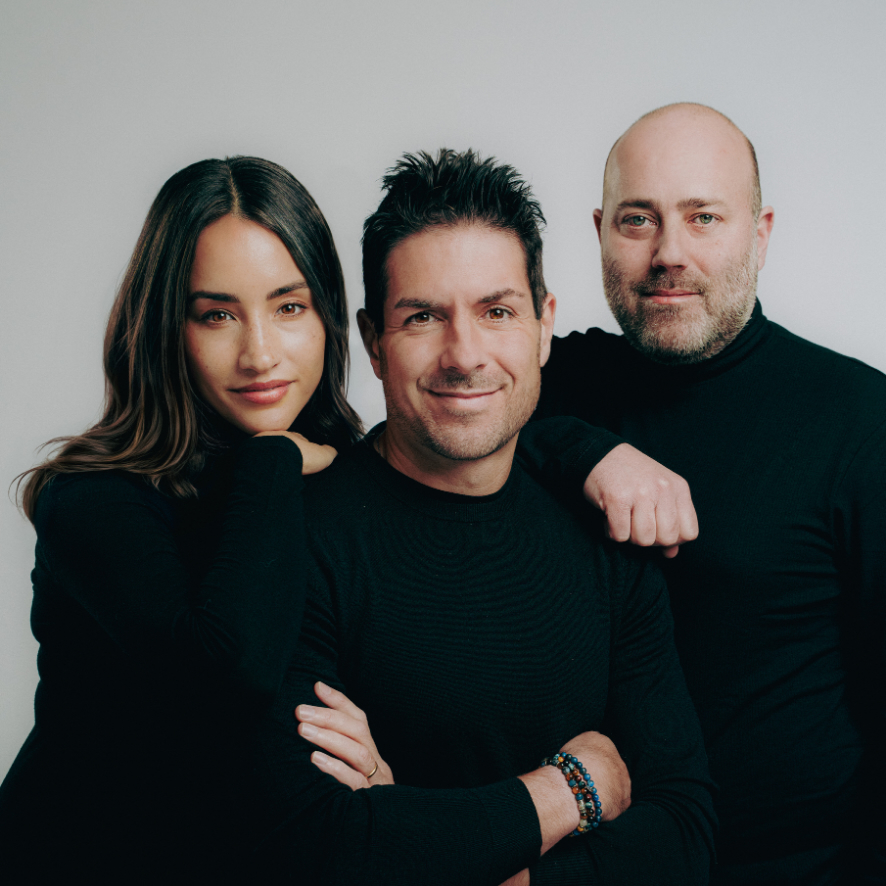
It led him, in 2014, to start Eight Sleep with his wife and brand lead Alexandra Zatarain and engineer Massimo “Max” Andreasi Bassi. A decade later, Eight Sleep has generated over $500 million in Pod sales since 2019 and expanded into over 30 countries.
The customer base now matches the ambition. The Pod has become a fixture among founders, entertainers, and elite athletes — Mark Zuckerberg, Elon Musk, Tom Cruise, Halle Berry, and Joe Rogan among them, alongside competitors like Charles Leclerc, Taylor Fritz, and Sidney Crosby. Hundreds of thousands of people sleep on one each night.
An Overlooked Third of Life
Sleep technology had been stagnant for decades. The most recent breakthrough was memory foam, invented by NASA in 1966 for space travel and licensed to mattress manufacturers decades later. Two-thirds of human life had been digitized, instrumented, and optimized. The remaining third had been left alone.
Franceschetti started reading clinical papers and found that the science already existed: thermoregulation, the way body temperature drops at sleep onset and rises hours before waking, had a direct measurable effect on sleep depth and quality. The technology to actually manipulate that cycle in a bedroom had simply never been built at consumer scale.
Eight Sleep’s first product was a passive mattress cover that tracked sleep through embedded sensors. The team demoed it at what Franceschetti calls “the pajama party” — a small gathering at Max’s house in San Francisco, where Zatarain ran the presentation. Before the night ended, a friend wrote them a $25,000 check to be the first money into the company.
That seed funded an Indiegogo campaign that pulled in roughly $1–1.5 million in pre-orders. Eight thousand units sold before the product existed. After completing Y Combinator in 2015, the team raised early-stage funding from a mix of investors.
Manufacturing was the next test. The team had no experience producing physical products at scale, and eight thousand customers were waiting for units the factory could not yet assemble. Franceschetti went to Zatarain.
“Manufacturing is not happening,” he told her. “I have to go to China.”
“When do you go?”
“Tomorrow.”
“When do you come back?”
“Once I’ve fixed it.”
He went the next morning and didn’t come back for four months. He walked the factory floor, rebuilt the production lines, and got the first products shipping.
The Pod
By 2017, Eight Sleep had a working product and a growing customer base. The open question was what would turn it into a category.
Franceschetti talked to customers directly, often answering support emails himself, and one request kept coming back: cooling. Couples were fighting over thermostat settings. People who slept hot wanted relief. Around 80 percent of customers Franceschetti talked with asked for the same feature.
The clinical literature backed them up. A bed that could cool at sleep onset, warm before waking, and respond to a sleeper’s vital signs in real time would do what no mattress had done before. The team raised the capital to build it.
The Pod launched in 2019: a mattress cover with embedded sensors, micro-tubing, and an external thermal hub that circulated water at independent temperatures for each side of the bed. It tracked heart rate, respiration, and movement through vibration-based sensors at chest level, and an AI layer the company calls Autopilot adjusted temperature dozens of times per night based on sleep stage, room conditions, and personal patterns.
A peer-reviewed study published in the journal Bioengineering found that sleeping one week on the Pod’s temperature-controlled cover increased deep, REM, and light sleep across different parts of the night and improved cardiovascular recovery, measured against a home sleep-test device across 54 subjects.
Sleep Fitness
Even with the Pod working, Eight Sleep had a positioning challenge. Customers searched for “smart mattress cover” — a phrase that did not exist as a category.
“We were not intentional about our positioning for the first five years of the company because we didn’t even know what brand positioning was,” Zatarain told The Profile. “We were just building the business and doing whatever we thought would resonate with the market, so we were building that positioning from the outside in.”
She compares the period to adolescence. “When you’re a teenager, you’re trying to fit in at high school. But deep down, you don’t really feel like you’re expressing yourself. And as a company, if you behave like a teenager, you’ll never mature, you’ll never grow. You’ll be able to maybe get to a certain level of revenue or notoriety, but you’re never going to become an iconic company because you’re not being authentic with who you are.”
The turn came when the team was introduced to Andy Cunningham — the strategic marketing executive who had helped Steve Jobs launch the Macintosh in 1984. Cunningham took Zatarain and Franceschetti through a positioning exercise built around founder identity.
Her framework worked from the inside out: she asked one question first – is the company mission-driven, product-driven, or customer-driven? – and built positioning outward from the answer. Eight Sleep was mission-driven. The implication, Cunningham told them, was that the company should create its own category.
The category they named was sleep fitness. The premise: sleep is a workout. It requires effort, discipline, and instrumentation. It is the foundation of physical and mental performance, and it can be measured, trained, and improved.
The category Eight Sleep was building had no other occupants. Mattress companies were selling furniture, while Eight Sleep was selling performance. The repositioning changed everything downstream.
“Now we know what to say yes to and what to say no to,” Zatarain said. “Our team understands what is aligned with who we are and what is not. It just makes making decisions so much easier.”
Eight Sleep leaned into premium positioning. Marketing centered on founders, athletes, and CEOs who treated rest as a discipline. Word-of-mouth referrals climbed to roughly 30–40 percent of revenue.
The Intelligence Layer
The Pod was a sensor platform from day one, with a thermal engine attached. Franceschetti wrote a memo in 2017 that he called “The Future of Sleep,” sketching out a system that would eventually control temperature, light, noise, oxygen, air quality, and elevation — every variable that affects sleep architecture. The Pod 4 already manages temperature and elevation for snoring mitigation. Pod 5, released in 2025, brought integrated sound through speakers and sharper detection of sleep patterns.
The system adapts to each sleeper. Eight Sleep’s models read heart rate, respiration, and movement through vibration sensors at chest level, then adjust temperature throughout the night to fit the individual’s sleep stages. The company calls the system a sleep butler. That’s the language customers tend to use, too — a quiet helper working through the night.
The Pod learns. Six months of nightly readings on the same sleeper produces sharper adjustments than six weeks. The improvements customers report — faster onset, more deep sleep, fewer wake-ups — get sharper over time.
A Wider Audience
For most of Eight Sleep’s early years, its most vocal fans were Silicon Valley founders and tech executives. The customer base today is broader. The typical user is what Zatarain calls “a health-conscious person” between 25 and 55, the kind who eats healthy and exercises a few times a week.
Women are the fastest-growing demographic, particularly those moving through menopause, pregnancy, or the postpartum period — segments where temperature dysregulation and broken sleep are common, and where the Pod’s split-side cooling delivers immediate, visible benefit. Some of the most affecting customer letters come from chemotherapy patients managing hot flashes during treatment.
Eight Sleep has begun introducing products around the platform. Franceschetti describes the long-term ambition as becoming “the everything sleep company.” A line of supplements includes nightly sleep-support capsules and a jet-lag protocol that pairs dosing instructions with an in-app schedule of light exposure, exercise, and meal timing.
The Bigger Mission
Franceschetti has always described Eight Sleep’s potential on two tracks. The first is sleep compression: what if the same eight hours could deliver the recovery of ten, or eventually be compressed to six? The second is preventative health: what if the bed itself became the most useful diagnostic instrument in the home?
The preventative-health side is further along than it was. The Pod’s sensors already detect snoring without microphones, monitor cardiovascular signals, and flag unusual nightly patterns the company has begun correlating with specific risk profiles. Eight Sleep has received customer letters describing irregular readings that prompted emergency-room visits, surgeries, and lives saved.
The mission has a personal source. Zatarain’s father was diagnosed with cancer late, when treatment options had narrowed. “When that happened, it really triggered something in my brain,” Franceschetti said in a 2025 interview. “There is this AI wave, Elon Musk is taking me to Mars, but we are still unable to know what is happening in our body. That must be fixed.”
The technical roadmap follows from that. The next generation of the Pod will integrate additional sensor types — radar, computer vision, and ambient air monitoring — and the AI will move from optimizing sleep toward broader preventative-health applications, with cancer detection, sleep apnea, and cardiovascular monitoring among the areas the company is working on.
Eight Sleep’s identity is expanding beyond sleep. The Pod becomes one of the most consistent diagnostic instruments most people will ever interact with — present every night, embedded in furniture, observing the same body across decades. Wearables come off, but the Pod stays installed. “Your bed will become the most powerful preventative health platform in the future,” Franceschetti said, “and will save your life.”
Going Global
Eight Sleep’s next chapter is about expansion – into more countries and more categories of sleep and longevity products.
In August 2025, HSG led Eight Sleep’s Series D round to support the company’s global expansion.
“From the start, Eight Sleep approached sleep as an engineering problem worth solving at the highest level,” said Jiajia Zou, Partner at HSG. “Achieving that means getting hardware, software, and data to work in concert, which is enormously difficult. The team has built exactly that. Sleep has long been one of the most difficult parts of our health to improve consistently, and the implications of finally changing that reach well beyond a better night’s rest.”
In November 2025, Eight Sleep officially launched in Singapore – the company’s first market in Asia. Roughly one in three Singaporeans report sleep disturbances, the average resident sleeps 6.5 hours on weekdays, and the city has one of the world’s densest concentrations of health-conscious consumers per capita.
“Sleep is the foundation of health and longevity,” Franceschetti said at launch. “Our goal is to bring clinical-grade recovery into the bedroom and help more people wake up feeling restored and energized.”
Five months later, in April 2026, Eight Sleep brought the Pod to China – a market where more than 300 million people are estimated to have sleep disorders, and where average nightly sleep is about 6.97 hours, according to the Chinese Sleep Research Society.
The Asia launches are one chapter of a longer expansion. Eight Sleep’s first decade built the product, the brand, and the audience. Matteo’s stated ambition has always been to build what he calls an iconic global company – improving millions of lives along the way. The pieces are now in place to do both.