Founder Spotlight: Hosam Arab’s Bold Vision for Tabby and Consumer Finance in the Middle East
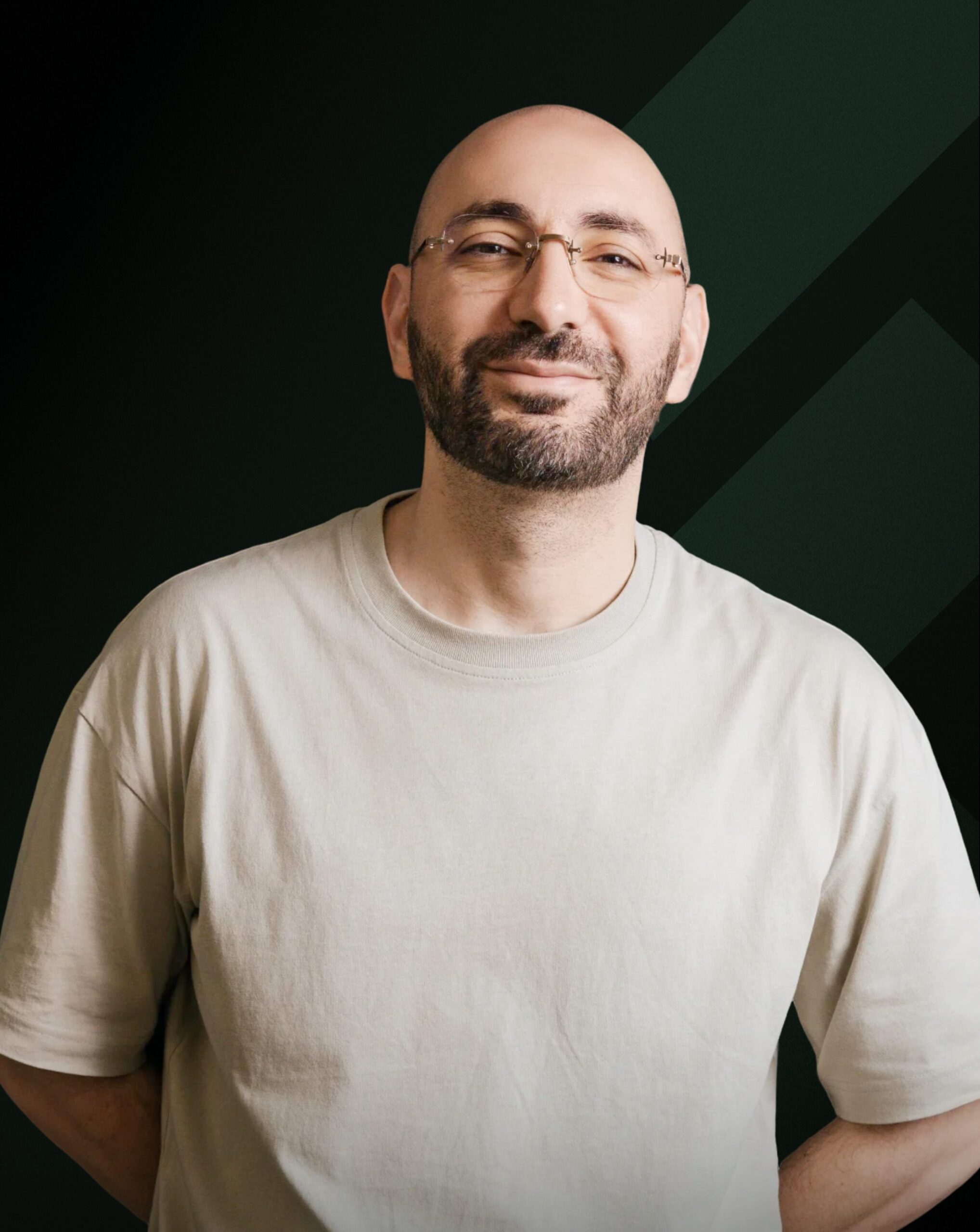
For most of his career, Hosam Arab has worked at the front edge of the Middle East’s consumer internet. Trained as an engineer, he spent his early career in the energy and industrial sectors before deciding that corporate life wasn’t for him, completing an MBA at Harvard Business School, and trying advisory work and private equity before concluding that entrepreneurship was the answer.
In 2011, he co-founded Namshi, the online fashion retailer that became one of the region’s defining e-commerce successes. Over eight years, he scaled Namshi across the UAE, Saudi Arabia, and the broader GCC, navigating the shift from cash on delivery to digital payments, building early in-house logistics on top of Aramex, and riding — and shaping — the emergence of the regional e-commerce ecosystem. Emaar acquired the business in 2019.
What stayed with Arab from Namshi was an operational problem he had never been able to solve: how to move customers away from cash on delivery. That unresolved challenge, coupled with the rapid emergence of Buy Now, Pay Later as a consumer category in other markets, became the thesis for Tabby.
In 2019, together with co-founder Daniil Barkalov, Arab launched Tabby in Dubai. Six years later, Tabby is headquartered in Riyadh, serves more than 25 million registered users across Saudi Arabia, the UAE, and Kuwait, partners with more than 65,000 brands and small businesses, processes over $18 billion in annualized transaction volume, and was most recently valued at $4.5 billion. Its product platform now spans flexible payment plans, the Tabby Card, the Tabby Plus subscription, Tabby Shop, and the digital wallet capabilities of Tweeq, which Tabby acquired in 2024.
In this conversation, Arab talks about the winding path that led him to entrepreneurship, what he learned building Namshi in a market that had no blueprint, the founding insight behind Tabby, the move from Dubai to Riyadh, what it takes to build a regulated financial services business at scale across the GCC, and his advice for founders building in fintech today.
Where did your entrepreneurial journey begin?
I’m the first entrepreneur in my family. Nothing in my background pointed me toward startups. I trained as an engineer, did stints at Schlumberger and GE, tried a few other things, and at every step, I left because I realized I wasn’t enjoying what I was doing. I thought HBS would give me the answers. It didn’t. After I finished, I went into advisory work. I didn’t enjoy that either. Then into private equity, which also wasn’t the right fit. Eventually I concluded that maybe the issue wasn’t the industries I was trying. Maybe it was me. Entrepreneurship was the only thing left.
What crystallized the move was exposure to companies that were genuinely new. I had first encountered Zappos in the US around 2007 and 2008, when they were in the early stages of really scaling, and the idea of what online commerce could be in a high-experience category stayed with me. When I came back to the region, there wasn’t much going on. Souq was experimenting in electronics. A few daily deals players existed. Fashion was wide open. What sealed it was meeting Rocket Internet at the moment I had already decided I was leaving the corporate path. A lot of coincidences lined up at once. What was clear was the gap and the conviction that customers in the Middle East would value convenience and experience just like customers anywhere else, if someone actually built for them.
You built Namshi over roughly eight years. What were the most important lessons from that period, and what surprised you along the way?
The first four years were a period of building foundations. The market was still emerging, there were very few channels to scale through, and there was very little in the way of a playbook for what we were trying to do. That environment turned out to be a gift. We had the luxury of time to experiment, to break things, to figure out what worked. We stumbled into apps. There was real internal debate about whether anyone would buy a dress on a small screen, but within a short period we were doing 85 to 90 percent of our transactions through the app. We experimented with influencers in 2014 and 2015, when almost no one in the region was doing it, and the returns were exceptional. We launched Saudi in 2012 as a test. It ended up at roughly 80 percent of our volume. We forced ourselves into building logistics capability on top of Aramex because the available solutions weren’t good enough. None of this was planned as strategy. We let customers and data decide, tested fast, and killed what didn’t work.
The surprise on the positive side was how much you can learn when the market is giving you room to experiment. Once the market heated up, roughly 2015 to 2018, the dynamics changed. Capital poured in, a mix of international and regional players entered, and competition compressed very quickly into a race to the bottom: heavy discounting, commoditized experience, very little creativity or differentiation. That pattern plays out in many markets as categories mature. If I were building a pure-play e-commerce business in the region today, I would think twice. The market has matured significantly, and the competitive dynamics are very different from when we started Namshi.
After Namshi, what drew you to fintech and to the specific problem that Tabby solves?
What I wanted was something that was still anchored in the same consumer world I understood, but that solved a different problem: one I’d spent eight years at Namshi unable to solve.
The problem was cash. Over our eight years at Namshi, cash as a share of transactions declined from about 85 percent to about 75 percent. That’s a very slow movement in a category where everyone assumed cash would die. We tried everything. We incentivized customers to move off cash by giving them discounts for paying by card. The moment we switched off the discount, they reverted. We added a cost to Cash On Delivery — they paid the cost and kept choosing cash. Neither worked, which forced us to ask why.
We realized customers weren’t attached to cash for the reasons we had assumed. They didn’t have strong trust in online retailers — not in the product, not in the delivery experience, and not in the idea that they would receive what they ordered when they were promised it. By paying cash on delivery, customers were pushing the risk back onto the retailer. Cash was a trust mechanism, not a financing preference.
Once you see the problem that way, the answer changes. Buy Now Pay Later (BNPL) was scaling in other markets primarily as a financing product. It was a more convenient way for consumers to spread the cost of a purchase. In our region, the financing value was real, but there was a second, larger layer: BNPL by design allows the customer to pay after they’ve received the product. That solves the trust problem directly. Build that well, do it in an interest-free form that aligns with how our customers want to engage with credit, and you have a product with appeal across a much broader demographic than BNPL reaches in Europe or the US. Daniil and I started Tabby in 2019 to build that.
How would you explain Tabby and its role in the regional economy to someone who isn’t in fintech?
The simplest version: Tabby lets you buy something today and pay for it in four equal installments, with no interest and, in Saudi Arabia, no late fees. You make the first payment at checkout, and the rest are spread out over the following weeks. You can use Tabby online with thousands of merchants, and you can use the Tabby Card to pay in installments at any store that accepts Visa.
The philosophy behind the product is responsible spending. Installments have always existed in this region, and banks have offered them for decades. The difference is that most existing installment solutions place an added cost on the customer in the form of interest and hidden fees. Our goal is to help customers spread the cost of their purchases without overburdening them. The customer benefits because they get to buy what they need on terms they can manage. The merchant benefits because they make a sale that they otherwise might not have.
For sellers, the value is direct. BNPL grows out of a mutually beneficial relationship between customers, sellers, and us. Shoppers get the financial flexibility, merchants see improvement in their core retail metrics, and Tabby ties that triangle into a seamless user experience. Signing up as a shopper takes a few seconds. A seller can integrate our payment solution into their checkout within a few hours. That sits behind a partner network that today includes global names like Amazon, IKEA, Adidas, SHEIN, H&M, and Samsung, alongside a long tail of large and small regional businesses.
One of the things I’ve come to appreciate about the business model, which became clearer to us as we scaled, is that our customer acquisition cost is essentially zero. We acquire customers through our merchant partners rather than buying them through paid channels. If you compare that to building a neobank or a standalone wallet in this region, where customer acquisition costs can run to hundreds of dollars per customer, the economics are fundamentally different, and that difference is part of what lets us build and distribute a much wider range of financial products over time.
Tabby is now far more than a BNPL business. What does the platform look like in practice today?
The original BNPL product remains the front door for most of our customers, and it’s still the largest part of what we do. Around it, we’ve built a set of products that together form a more complete financial services experience.
The Tabby Card lets customers split payments at any of our in-network merchants. It’s a simpler, more seamless way to use Tabby in physical stores, restaurants, and everyday spending. Customers who subscribe to Tabby Plus unlock the ability to use the Tabby Card at any store that accepts Visa, along with exclusive offers and cashback. Tabby Shop helps customers discover deals and payment options across our partner network. And for customers who want more time, we also offer longer payment plans for a transparent fee, a straightforward way to manage larger purchases on their own terms, without hidden costs or compounding interest.
Across all purchases made through Tabby online, customers benefit from a built-in layer of protection with Tabby Care, which provides coverage for items that don’t arrive, arrive damaged, or fail to match what was ordered.
The acquisition of Tweeq in September 2024 added a meaningful new dimension. Tweeq is a Saudi-based digital wallet, and it gave us a regulated foundation to expand into digital spending accounts, payments, cards, and money management tools. That acquisition was a deliberate step toward becoming a comprehensive financial services platform rather than a single-product company.
I saw BNPL from the start as a springboard rather than a destination. It’s a very clear value proposition for the customer and a strong hook for getting them to transact with you for the first time. Once you’ve built that relationship, and once you have a customer acquisition model that doesn’t rely on expensive paid acquisition, the question becomes which other products you can build for the same customer to make their financial lives easier. After several years of strong BNPL growth in our markets, retail finance is expanding beyond retail. Shoppers want to spend, save, and manage their money all in one place. Our ambition is to be the app where customers take real control of their finances, where they can send, spend, save, and do more with their money on their own terms.
What has the headquarters move from Dubai to Riyadh meant for Tabby?
The decision to relocate to Riyadh in late 2023 came from a natural evolution in the business. Saudi Arabia represented over 70 percent of our customer base at the time, and we were the market leader in the Kingdom. Moving the headquarters reflected where our business already was. The Vision 2030 agenda created an environment in which a company building digital financial infrastructure can move quickly and contribute meaningfully to the broader transformation underway. The Saudi government is actively supporting the conditions for fintech to grow, and that alignment has been central to how we’ve scaled.
The pace of what followed reinforced the decision. We graduated from SAMA’s regulatory sandbox and received our BNPL license, which gave us regulatory clarity and a platform to build new products. We see it as our duty to work with SAMA to ensure consumers get the proper protections, and that depth of regulatory engagement has become a real source of strength for the business. We reached unicorn status in November 2023. Since then, the business has continued to scale rapidly and has reached profitability.
What have you learned from building Tabby that was different from Namshi?
The biggest difference between the two experiences is that, with Tabby, we didn’t have the luxury of time we had with Namshi. We launched Tabby, raised our first funding, and were live in two markets within a six- or seven-month window. That kind of pace would have been impossible the first time around. It was forced on us by the simple reality that the region had matured, capital was flowing in, and if you didn’t execute quickly, you were leaving room on the table for others.
The other big difference is the capital environment. When we were raising for Namshi in 2011, access to capital was a real constraint. Most potential investors in the region didn’t understand tech as an asset class. You’d walk into meetings and be told, “I invest in real estate, why would I invest in tech?” By the time we were raising for Tabby, the investor universe, both regional and international, was far deeper. That shift is one of the most important things that’s happened in the ecosystem over the last decade.
The two biggest challenges I flagged for Tabby back in 2020, funding and risk, are still the right answer today, at a very different scale. The risk side has stayed central because data on consumers in this region was, and to some extent still is, more limited than in more mature credit markets. Building strong underwriting in those conditions requires constant iteration on the risk model and a real investment in data science. The funding side has stayed central because the BNPL model requires us to pay our merchant partners before we get paid by our customers. Our sellers take a risk on us, and our job is to make sure cash flow and timely payments are not things they need to worry about.
You’ve talked about Tabby becoming a comprehensive financial services platform. How do you see the next chapter for Tabby, and for the financial lives of consumers in MENA, evolving over the next five years?
The thesis we’ve been operating on for several years is that the financial lives of consumers in this region will be reshaped by a small number of digitally native, locally built platforms that earn the right to handle multiple parts of how people manage money. Five years from now, I expect a much larger share of everyday consumer spending in the GCC to flow through digital wallets, embedded payment products, and integrated savings and money management tools. The shift to a cashless economy that Saudi Arabia has set as a Vision 2030 priority is happening, and it’s happening faster than many people outside the region appreciate.
For Tabby specifically, the next chapter is about deepening into financial services beyond BNPL while continuing to grow the core. That means expanding the digital spending account capabilities we acquired with Tweeq, building richer money management tools, and giving customers more ways to take control of their finances, to send, spend, and save in a single place that actually works for them. Our focus continues to be the Middle East. We have no immediate plans to grow Tabby overseas, which lets us focus on building products specifically for this region. Underneath the product roadmap is the platform work. This includes the data, underwriting, regulatory licenses, and merchant network, which together help each new product launch faster than the last.
What advice would you share with founders building in fintech, and in MENA, today?
The most important thing, and I mean this plainly, is that you cannot go into entrepreneurship half-committed. I see a lot of young people trying it as a side project or a hobby. That may work in some markets. It does not work here. You have to put everything into it, and more. And it does not get easier once you’ve done it before. Even after a successful exit at Namshi, building Tabby hasn’t been easier. Many of the challenges are the same. The effort is not smaller.
Second, be clear-eyed about the space you’re entering. The white spaces in this region are narrower than they used to be. Unless you’re clearly differentiated, and unless you’re willing to invest heavily in what you’re doing, don’t come in. That applies in e-commerce. It increasingly applies in other consumer categories. What still works is a product that solves a real problem for a real customer in a form specifically shaped for this region. Imported models rarely work without serious localization. The founders who succeed here are the ones who treat local payment behavior, regulatory frameworks, and cultural attitudes toward credit as design constraints worth respecting.
Third, the operational parts of financial services are where the value is built. Underwriting, collections, customer support, and regulatory engagement determine whether a fintech business compounds or stalls. Founders who treat those areas as core product work and who hire and invest accordingly pull ahead over time.
Finally, choose your investors with the same care you choose your operating partners. The right investors at each stage make hard things easier, open doors that would otherwise stay closed, and bring perspective that helps you see around corners. We were fortunate to find investors who understood the region, understood retail, and understood payments, and that combination of expertise mattered enormously.